 adsenservice
Related Articles
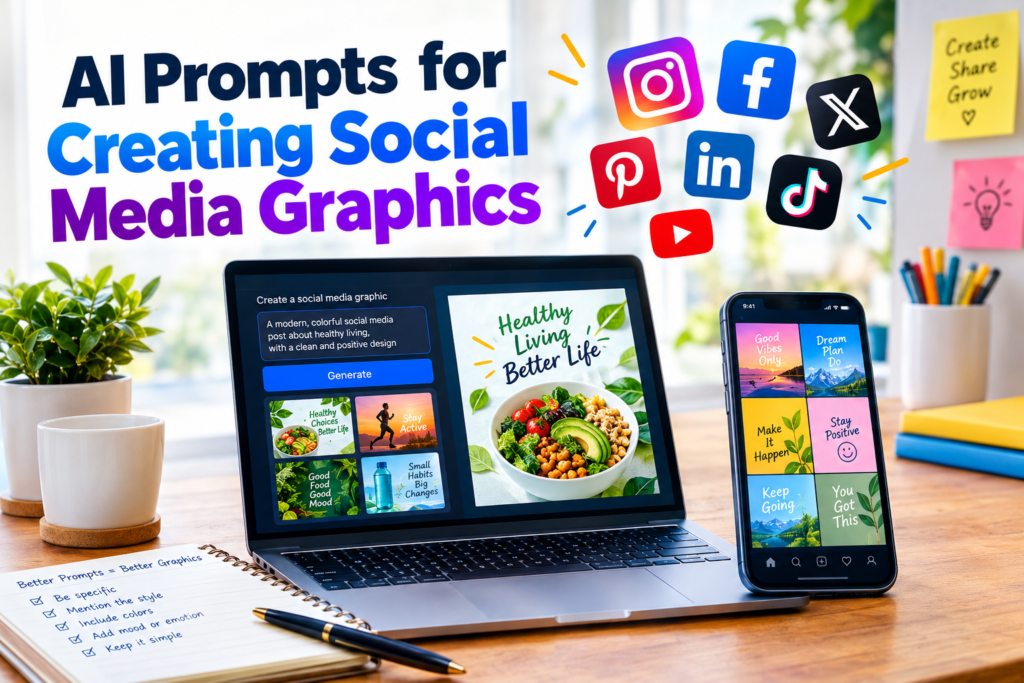
Social media has become one of the easiest ways to share ideas, promote a business, build a personal brand, and connect with an audience. However, creating fresh graphics for every post can take a lot of time. This is where AI prompts for creating social media graphics can make the process much easier.
From my experience, the biggest advantage of AI is not simply that it can create an image quickly. The real advantage is that it helps turn a basic idea into a visual concept. You can describe the style, colors, mood, subject, audience, and purpose of a post, and an AI tool can use those instructions to create a starting point.
Whether you are a blogger, content creator, small business owner, marketer, or beginner, learning how to write effective AI prompts can help you create better social media graphics with less effort.
What Are AI Prompts for Social Media Graphics?
An AI prompt is simply an instruction that tells an AI tool what you want it to create. When you are creating social media graphics, the prompt can describe the subject, design style, colors, layout, mood, and audience.
For example, instead of writing:
“Create a fitness image.”
You could write:
“Create a modern social media graphic about healthy fitness habits, featuring a person exercising outdoors, natural lighting, fresh colors, clean composition, and an energetic but professional appearance.”
The second prompt gives the AI much more information. As a result, it has a clearer idea of the type of graphic you want.
Why AI Prompts Are Useful for Social Media
Creating social media content consistently can become difficult when you have to think of new visual ideas every day. AI prompts can help solve this problem by giving you a simple way to explore different concepts.
I particularly like using prompts when I have an idea in my mind but do not know how to turn it into a visual design. Instead of starting from a completely blank page, I can describe the idea and let AI create different possibilities.
AI can also help with:
- Instagram posts
- Facebook graphics
- Pinterest images
- LinkedIn graphics
- YouTube thumbnails
- Promotional visuals
- Quote graphics
- Product advertisements
- Event announcements
- Educational posts
The important thing is to create prompts that match the platform and the purpose of the content.
Start With the Main Idea
The first part of a good AI prompt should explain what the graphic is about.
If you are creating a social media post about gardening, for example, clearly mention gardening. If the post is about travel, describe the destination or travel concept.
A simple prompt could be:
“Create a social media graphic about beginner gardening tips with green plants, gardening tools, healthy soil, and a bright outdoor setting.”
This gives the AI a clear subject.
I recommend keeping the main idea straightforward before adding additional details. A complicated prompt can sometimes contain too many competing instructions.
Describe the Visual Style
After explaining the subject, think about the visual style you want.
You could ask for a realistic photograph, modern illustration, minimalist design, watercolor artwork, professional advertisement, colorful lifestyle image, or elegant business graphic.
For example:
“Create a realistic social media image of a modern home office with natural sunlight, neutral colors, clean furniture, and a professional photography style.”
The style can have a major effect on the final result. If you want your social media account to look consistent, using similar style instructions across your prompts can also help.
Choose Your Colors Carefully
Colors can change the feeling of a social media graphic. Bright colors can make a design feel energetic, while softer colors can create a calm and professional appearance.
Instead of asking AI to create something colorful, be more specific when color matters.
For example:
“Use a combination of dark blue, white, and light gray with small yellow accents.”
For a gardening post, you might ask for natural green tones with warm earthy colors. For a technology post, blue, white, and dark backgrounds may create a modern appearance.
There is no single perfect color combination. The right choice depends on your subject and brand.
Add the Desired Mood
The mood of an image is another useful part of an AI prompt.
You can describe a graphic as cheerful, calm, professional, energetic, elegant, friendly, inspiring, or dramatic.
For example:
“Create an inspiring social media graphic showing a person reaching the top of a mountain during sunrise, with a hopeful and motivational mood.”
This gives the AI additional creative direction.
I find mood especially useful for quote posts and motivational content because the image needs to support the message rather than simply show an object.
Mention the Target Audience
Knowing who will see the graphic can also improve your prompt.
For example, a graphic designed for students should look different from one designed for business professionals.
You can write:
“Create a clean educational social media graphic for college students about effective study habits, using simple icons, a modern layout, and a friendly academic style.”
This tells the AI not only what the graphic should contain but also who it is intended for.
Create Prompts for Different Social Media Platforms
Different platforms have different content styles and visual requirements. When creating AI prompts for social media graphics, mention the intended platform when appropriate.
For Instagram, you might want a visually attractive square or vertical design.
For Pinterest, a vertical composition can work well.
For LinkedIn, a clean professional appearance may be more suitable.
For YouTube, the graphic may need a strong focal point because thumbnails are often viewed at smaller sizes.
A useful prompt could be:
“Create a professional LinkedIn graphic about remote work productivity, with a clean modern office scene, simple composition, readable space for a short headline, and a professional business style.”
This gives the AI a clearer purpose.
AI Prompts for Instagram Graphics
Instagram is highly visual, so attractive composition is important.
Try a prompt such as:
“Create a modern Instagram graphic about healthy morning routines, featuring a bright bedroom, a cup of coffee, a journal, natural sunlight, fresh colors, and a clean lifestyle photography style.”
You can then create variations by changing the subject, colors, or mood.
For quote graphics, you can also request empty space where text can be added later in a design application.
AI Prompts for Business Graphics
Businesses can use AI prompts to create promotional graphics, product concepts, announcements, and educational posts.
For example:
“Create a professional social media advertisement for a modern online learning service, featuring a laptop, notebook, subtle technology elements, clean composition, professional lighting, and space for a short promotional message.”
I recommend adding the actual business text later when possible. AI generated text inside images can sometimes contain spelling or formatting problems.
AI Prompts for Quote Graphics
Quote posts are popular because they are simple and easy to share.
A useful prompt might be:
“Create an elegant social media background for an inspirational quote, showing a peaceful mountain landscape during sunrise, soft natural lighting, minimal composition, and clear empty space in the center for text.”
The key idea here is to tell AI where you want space for your text.
AI Prompts for Product Graphics
AI can also help create product concepts and promotional visuals.
For example:
“Create a premium product photography scene featuring a modern reusable water bottle on a clean wooden table, soft studio lighting, green plants in the background, realistic materials, and a minimal lifestyle advertisement style.”
If you are using an actual product, make sure the final graphic accurately represents the real product. AI generated versions can sometimes change important details.
Use Negative Instructions When Helpful
Some AI tools allow you to explain what you do not want in an image.
For example:
“Create a clean social media graphic with one main subject, simple background, realistic lighting, no unnecessary objects, and no distorted elements.”
This can help reduce unwanted visual clutter.
However, not every AI image generator interprets negative instructions in exactly the same way, so you may need to experiment.
Keep Your Prompts Specific but Natural
One mistake beginners often make is adding too many unnecessary words. A longer prompt is not automatically a better prompt.
A good prompt should contain the details that actually matter.
Think about five basic questions:
What should be shown?
What should it look like?
What colors should be used?
What mood should it have?
Where will the graphic be used?
Once you answer these questions, you can create a useful prompt without making it unnecessarily complicated.
Improve Your Results Through Experimentation
The first AI generated graphic may not be exactly what you imagined. That is completely normal.
Instead of abandoning the idea, improve the prompt.
If the image is too busy, ask for a cleaner composition.
If the colors are too strong, request softer colors.
If the subject is too small, ask for a closer composition.
If the design looks unrealistic, request a realistic photography style.
I think this process is one of the most useful parts of working with AI. You gradually learn which descriptions produce the results you want.
Create a Reusable Prompt Formula
Once you understand the basics, you can create your own prompt formula.
A simple structure is:
Subject + Style + Colors + Mood + Composition + Audience + Platform
For example:
“Create a healthy cooking social media graphic, realistic food photography style, fresh green and warm neutral colors, friendly and positive mood, overhead composition with a healthy meal in the center, designed for beginner home cooks on Instagram.”
You can replace each section with different information and quickly create new prompts.
Final Thoughts
AI prompts for creating social media graphics can make visual content creation much easier. You do not need to be an expert designer to start experimenting with AI. What matters most is learning how to communicate your idea clearly.
From my point of view, the best approach is to start with a simple concept and gradually add useful details. Describe the subject, style, colors, mood, audience, and intended platform. Then review the generated result and improve your prompt based on what you see.
AI is not a replacement for your own creativity. It is a tool that can help you develop ideas faster and explore designs that you may not have considered before.
With regular practice, you can build a collection of effective AI prompts for social media graphics and use them whenever you need fresh visual content for your website, brand, or social media pages.