 adsenservice
Related Articles
AI image generators have changed the way we think about creativity. In the past, creating a unique image often required professional design skills, expensive software, and plenty of time. Today, anyone can describe an idea in simple words and use an AI image generator to turn that description into a visual.
In my experience, the biggest difference between an ordinary AI image and an impressive one is often the prompt. AI tools can create beautiful results, but they need clear instructions to understand what you actually want. A short and vague prompt may produce something that looks acceptable, while a detailed and creative prompt can produce an image that feels much more intentional.
That is why learning how to write effective AI prompts for creative image ideas is useful for bloggers, designers, students, marketers, social media creators, and anyone who enjoys experimenting with visuals.
What Is an AI Image Prompt?
An AI image prompt is a written description that tells an image generation tool what kind of picture you want. It can describe the subject, environment, lighting, colors, mood, composition, camera angle, artistic style, and many other details.
For example, instead of writing:
“Mountain landscape”
you could write:
“A peaceful mountain valley at sunrise, surrounded by pine forests, a clear lake reflecting snow covered peaks, soft morning mist, warm natural light, realistic photography.”
The second prompt gives the AI much more information to work with. This usually makes it easier to create an image that matches your idea.
Why Good AI Prompts Matter
I believe prompts are one of the most important parts of AI image creation. The image generator can only work with the instructions it receives. If the instructions are unclear, the result may not match your expectations.
A good prompt gives the AI a creative direction. It can help control the subject, background, atmosphere, composition, and overall appearance.
Good prompts are especially helpful when creating website graphics, blog featured images, social media posts, presentation visuals, concept art, educational illustrations, and creative projects.
The good thing is that you do not need to be a professional writer to create an effective prompt. You simply need to describe your idea clearly.
Best AI Prompt Formula for Creative Images
A simple formula can make prompt writing much easier.
Start with the subject, then describe the environment, style, lighting, mood, colors, and composition.
For example:
“An elegant modern coffee shop in a rainy city, large windows covered with raindrops, warm interior lighting, cozy atmosphere, realistic photography, cinematic composition.”
This structure can be changed for almost any creative image idea.
You can also experiment with different details until you find a result that matches your vision.
AI Prompts for Nature Images
Nature is one of my favorite subjects for AI image generation because there are almost unlimited creative possibilities.
Try prompts such as:
“An untouched tropical island with crystal clear water, tall palm trees, white sand, dramatic clouds, soft golden sunlight, realistic travel photography.”
Another idea is:
“A peaceful forest during early autumn, orange and yellow leaves covering the ground, sunlight passing through tall trees, gentle morning fog, highly detailed realistic photography.”
For a more imaginative result:
“A magical forest glowing with tiny floating lights, ancient trees covered with moss, a small crystal stream, dreamy atmosphere, fantasy illustration.”
You can change the season, weather, time of day, or location to create completely different results.
AI Prompts for Portrait Ideas
Portrait prompts can be useful for creative projects, character concepts, profile graphics, and visual storytelling.
One example is:
“A confident young artist sitting beside a large studio window, natural morning light falling across the face, creative workspace in the background, realistic portrait photography, soft depth of field.”
For a fantasy character:
“A mysterious explorer standing in an ancient desert city, detailed leather clothing, dramatic sunset behind the character, cinematic lighting, realistic fantasy character portrait.”
When creating portraits, I recommend describing the person’s clothing, expression, environment, lighting, and mood. These details can make the image feel much more complete.
AI Prompts for Fantasy Images
Fantasy is another area where AI image generators can be extremely creative.
Try:
“An enormous ancient castle floating above the clouds, waterfalls flowing from the cliffs, birds flying around the towers, golden sunset, magical fantasy atmosphere, highly detailed digital art.”
You can also create fantasy landscapes:
“A hidden village inside a giant enchanted tree, small wooden homes connected by bridges, glowing plants, warm lanterns, peaceful nighttime atmosphere, detailed fantasy illustration.”
The important thing with fantasy prompts is to describe the world instead of simply naming an object. Think about what the viewer would see if they were standing inside that scene.
AI Prompts for Futuristic Images
If you enjoy technology and science fiction, futuristic prompts can produce interesting results.
For example:
“A futuristic city at night with intelligent transportation systems, glass skyscrapers, glowing streets, flying vehicles, pedestrians, reflections after rain, cinematic realistic photography.”
Another option is:
“A modern home in the year 2050 surrounded by green gardens, solar technology, smart glass windows, clean architecture, peaceful environment, realistic architectural visualization.”
These prompts work well when you include details about architecture, transportation, technology, lighting, and the surrounding environment.
AI Prompts for Product Photography
AI can also help generate creative product style images.
For example:
“A luxury wristwatch placed on a polished black stone surface, dramatic studio lighting, subtle reflections, premium advertising photography, clean background.”
For a food related image:
“A fresh cup of coffee on a wooden table beside an open book, soft morning sunlight, cozy home atmosphere, realistic lifestyle photography.”
Product prompts are particularly useful for brainstorming advertising concepts before producing a final professional photograph.
AI Prompts for Minimalist Images
Sometimes a simple image is more effective than a complicated one.
Try:
“A single green plant in a white ceramic pot on a clean wooden table, soft natural window light, minimal interior, neutral colors, realistic photography.”
Another example is:
“A single yellow chair in an empty modern room with large windows, soft daylight, clean architecture, minimalist photography.”
Minimalist prompts usually work best when you avoid adding too many objects. Focus on the main subject and give the AI enough information about the surroundings.
AI Prompts for Surreal Images
Surreal image ideas allow you to combine things that would not normally exist together.
For example:
“A giant moon floating just above a calm ocean, a small wooden boat sailing toward it, stars reflected across the water, dreamlike atmosphere, cinematic digital art.”
Another idea is:
“A city built inside a transparent glass bottle, tiny buildings illuminated at night, miniature roads and trees, mysterious atmosphere, highly detailed surreal artwork.”
This type of prompt can be especially useful when you want something unusual and memorable.
AI Prompts for Social Media Images
Social media creators often need attractive visuals that immediately capture attention.
One example is:
“A stylish home office with a modern laptop, coffee cup, indoor plants, notebooks, warm sunlight, clean organized desk, realistic lifestyle photography.”
For travel content:
“A scenic mountain road surrounded by green forests, dramatic clouds, a small car traveling through the landscape, cinematic travel photography.”
The key is to keep the main subject clear and avoid unnecessary visual clutter.
AI Prompts for Blog Featured Images
AI generated images can also be useful for blog featured images. I recommend keeping the main visual connected directly to the article topic.
For example, for an article about gardening:
“A peaceful home garden with healthy green plants, gardening tools, rich soil, wooden raised beds, natural morning light, realistic photography.”
For an article about artificial intelligence:
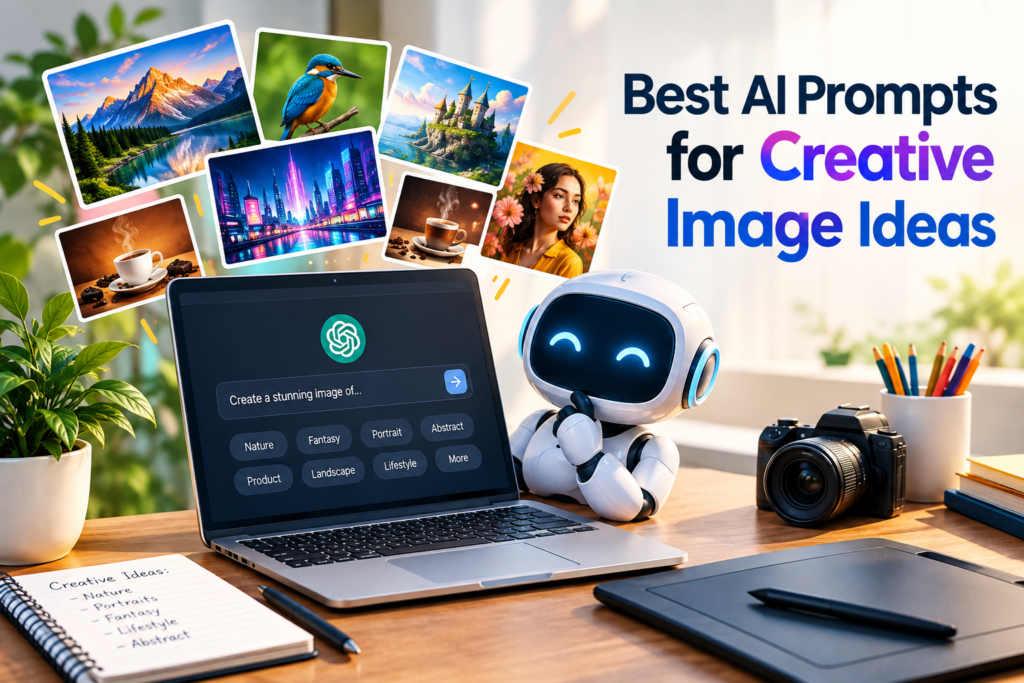
“A modern creative workspace with a laptop displaying an AI image generation interface, floating colorful digital artwork around the desk, clean professional environment, realistic technology photography.”
A relevant image can make a blog post look more professional and visually appealing.
How to Make AI Prompts More Creative
If your first image looks ordinary, do not assume that the AI tool is not useful. In many cases, the prompt simply needs more direction.
I usually start with the basic idea and then add details one at a time.
For example:
“A city street at night.”
Then improve it:
“A futuristic city street at night with tall glass buildings, colorful lights, wet pavement reflecting the signs, people walking under umbrellas, cinematic atmosphere, realistic photography.”
The second version gives the AI much more to visualize.
You can experiment with lighting, weather, perspective, color mood, environment, and artistic style.
Common Mistakes When Writing AI Image Prompts
One common mistake is being too vague. Writing only “beautiful garden” does not tell the AI what type of garden you want.
Another mistake is adding too many unrelated ideas. If you ask for a beach, mountain, city, forest, castle, and spaceship in one simple scene, the result may become confusing.
It is also important to avoid changing the main idea too much. Start with one clear concept and build around it.
I also recommend testing different versions of the same prompt. Small changes can sometimes create surprisingly different results.
Tips for Better AI Image Results
Here are some practical tips that I find useful.
First, clearly describe the main subject.
Second, explain where the subject is located.
Third, mention the mood you want.
Fourth, describe the lighting.
Fifth, specify an artistic direction when needed.
Sixth, mention the desired composition or camera perspective.
Seventh, experiment with different versions instead of expecting the first prompt to be perfect.
For example, you can change “soft morning light” to “dramatic sunset lighting” and create a completely different atmosphere without changing the main subject.
Final Thoughts
AI image generation is not only about technology. For me, it is mainly about turning an idea into something visual. A good prompt gives that idea structure and helps the AI understand what you are imagining.
The best AI prompts for creative image ideas do not necessarily have to be extremely long. They need to be clear, descriptive, and focused. Start with your main subject, add useful details, describe the environment and mood, and then experiment with different styles.
Whether you are creating blog featured images, social media graphics, fantasy artwork, product concepts, nature scenes, or futuristic designs, learning how to write better AI prompts can make the entire creative process easier.
The most important thing is to experiment. Try different words, combine unusual concepts, change lighting and perspectives, and see how the results evolve. With practice, you can build your own collection of AI prompts and use them whenever you need a fresh creative image idea.