 adsenservice
Related Articles


Introductions
Writing a good blog introduction is one of the most important parts of creating useful content. In my experience, readers decide very quickly whether they want to continue reading an article or move on to another page. This is why I always try to make the introduction clear, interesting, and directly connected to the reader’s problem.
When I am writing blog posts, I do not want the introduction to feel like unnecessary filler. I want it to tell readers what they can expect and give them a reason to continue. AI writing prompts can make this process much easier, especially when I am struggling to find the right opening.
In this article, I will share some of the best prompts for writing engaging blog introductions. These prompts can help bloggers create stronger openings, save writing time, improve readability, and make their content more useful for readers.
Why a Strong Blog Introduction Matters
A blog introduction has an important job. It needs to introduce the topic while creating enough interest for readers to continue.
A weak introduction may contain general statements that do not provide much value. For example, starting with a sentence such as “Technology is very important in our daily lives” does not give the reader a strong reason to continue.
A better introduction focuses on the reader’s situation. It can mention a common problem, ask an interesting question, provide a useful fact, or explain what the reader will learn.
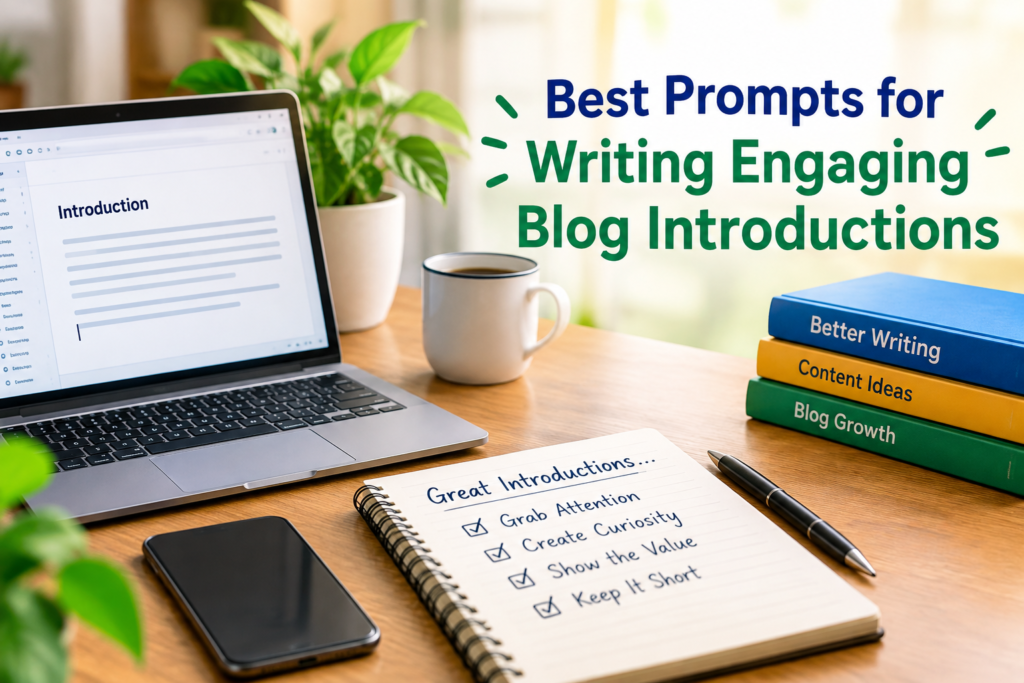
I believe a good introduction should answer three basic questions.
What is this article about?
Why does this topic matter?
What will the reader gain by continuing?
Once these questions are clear, writing the rest of the introduction becomes much easier.
How AI Prompts Can Improve Blog Introductions
AI prompts can help generate different opening ideas without replacing the writer’s personal experience or judgment. I usually find prompts most useful when I know what I want to say but cannot find the right way to start.
A detailed prompt gives the AI enough information about the topic, audience, tone, and purpose. Instead of simply asking for an introduction, I can explain exactly what type of introduction I want.
For example, a basic prompt would be:
“Write an introduction for a blog post about improving WiFi speed.”
A more useful prompt would be:
“Write a friendly and helpful introduction for a beginner friendly blog post about improving WiFi speed. Start with a common problem readers experience, create curiosity, and explain what readers will learn in the article. Keep the introduction concise and natural.”
The second prompt provides much more direction.
Prompt for a Problem Based Introduction
One of my favorite approaches is starting with a problem. This works particularly well for troubleshooting, how to guides, and practical articles.
Use this prompt:
“Write an engaging blog introduction about [TOPIC]. Start by describing a common problem readers face with this topic. Make the opening relatable and explain why solving the problem is important. Keep the tone friendly, natural, and helpful.”
This prompt can work for topics such as slow internet, writing problems, gardening mistakes, productivity, freelancing, and many other subjects.
The important part is making the problem realistic instead of exaggerating it.
Prompt for a Question Based Introduction
Questions can make an introduction feel more conversational.
Try this prompt:
“Write a blog introduction about [TOPIC] that begins with an interesting question related to a common concern or goal of the target audience. Follow the question with a short explanation of the problem and tell readers what they will learn from the article.”
This approach is useful when the topic naturally connects to something readers may already be wondering about.
For example, an article about blog writing could begin by asking why some blog posts receive attention while others are ignored. The introduction can then explain that the opening plays an important role.
Prompt for a Curiosity Driven Introduction
Sometimes I want an introduction that creates curiosity without becoming clickbait.
For that purpose, I use a prompt like this:
“Write a curiosity driven introduction for a blog post about [TOPIC]. Make readers interested in discovering the answer while keeping the introduction honest and informative. Do not use exaggerated claims. Use a natural conversational tone and clearly introduce the main topic.”
This is especially helpful for educational articles where there is an interesting discovery, process, or solution to explain.
Prompt for a Personal Experience Introduction
If you want your article to sound more personal, you can ask AI to create an introduction around an experience.
Try:
“Write a first person blog introduction about [TOPIC] as if the writer has personally experienced the problem. Make it sound natural and relatable. Avoid making unrealistic claims. Connect the personal experience to the information readers will learn in the article.”
I like this style because it can make a blog post feel less mechanical. However, I would always edit the result and make sure the experience actually reflects something I can honestly say.
Prompt for a Beginner Friendly Introduction
Many readers search for information because they are beginners. In that situation, complicated language can make an introduction less effective.
Use:
“Write a simple and beginner friendly introduction for a blog post about [TOPIC]. Explain the topic in clear language, mention the main problem or goal, and tell readers what they can expect from the article. Avoid technical jargon and keep the tone welcoming.”
This type of prompt is useful for technology guides, gardening articles, freelancing advice, and educational content.
Prompt for an SEO Friendly Introduction
SEO is also important when writing blog introductions. However, I believe keywords should be used naturally instead of forcing them into every sentence.
Try this prompt:
“Write an SEO friendly introduction for a blog post targeting the keyword [KEYWORD]. Include the keyword naturally within the first paragraph when appropriate. Clearly explain the topic, match search intent, and encourage readers to continue. Keep the language natural and useful.”
After generating the introduction, I recommend checking whether the keyword sounds natural. If it feels forced, rewrite the sentence.
Prompt for a Short and Powerful Introduction
Not every article needs a long introduction. In many cases, a short opening is more effective.
Use this prompt:
“Write a short and engaging introduction for a blog post about [TOPIC]. Keep it between 80 and 120 words. Start with a strong opening, identify the reader’s main concern, and explain what the article will cover. Use a friendly and natural tone.”
This is one of the easiest prompts to use when you want to get directly to the main content.
Prompt for Multiple Introduction Ideas
Sometimes the first introduction generated by AI is not the right fit. Instead of asking for one version, I prefer generating several options.
Try:
“Create five different introduction ideas for a blog post about [TOPIC]. Use different approaches such as a question, common problem, personal experience, surprising observation, and direct statement. Keep each introduction natural, useful, and suitable for a general audience.”
This gives you several directions to choose from. You can then combine the strongest parts into one original introduction.
Prompt for Improving an Existing Introduction
AI prompts are not only useful for creating new introductions. They can also help improve an introduction you have already written.
Use:
“Improve the following blog introduction without changing its main meaning. Make it more engaging, clear, natural, and reader friendly. Remove unnecessary filler, improve sentence flow, and create a stronger reason for readers to continue. Keep the original tone as much as possible.”
I find this approach especially useful because the original writing remains the foundation.
Prompt for Matching a Specific Audience
A good introduction should speak to the intended reader. A beginner, professional, student, and business owner may need completely different wording.
Try:
“Write an engaging introduction for [TARGET AUDIENCE] about [TOPIC]. Address their likely concerns, goals, or questions. Use language that feels natural for this audience and explain how the article can help them.”
Adding the audience to your prompt can make a noticeable difference.
Prompt for a Friendly Conversational Style
If you want your blog to sound like a person talking to the reader, use:
“Write a friendly conversational introduction for a blog post about [TOPIC]. Make it sound like an experienced writer is explaining the subject to a reader. Use simple sentences, natural wording, and a helpful tone. Avoid generic filler and overly formal language.”
This can be useful when you want your content to have a personal voice.
How to Get Better Results From Writing Prompts
The quality of the prompt usually affects the quality of the result. I recommend giving AI more context instead of using very short instructions.
Include the topic, target audience, keyword, tone, article purpose, desired length, and important points.
For example:
“Write a 100 word introduction for a beginner friendly article about container vegetable gardening. Target readers who have limited space. Use the keyword container vegetable gardening naturally. Start with a common challenge and explain how the article will help readers choose suitable vegetables and containers. Keep the tone friendly and practical.”
This gives the AI a clear direction.
Do Not Publish AI Generated Introductions Without Editing
One thing I always recommend is reviewing AI generated content before publishing it. AI can provide useful ideas, but the final introduction should sound like you.
Read the introduction aloud. Check whether the sentences sound natural. Remove repeated ideas and unnecessary statements. Make sure any facts or claims are accurate.
I also recommend adding your own perspective when appropriate. A small personal observation can make an introduction feel more genuine.
Final Thoughts
The best prompts for writing engaging blog introductions are the ones that provide clear direction. Instead of simply asking AI to write an introduction, explain the topic, audience, keyword, tone, problem, and goal.
Problem based prompts are useful for practical guides. Question based prompts can create conversation. Curiosity driven prompts can encourage readers to continue. Personal prompts can add personality, while SEO focused prompts can help you naturally introduce the main keyword.
From my point of view, AI works best as a writing assistant rather than a replacement for your own ideas. Use these prompts to overcome writer’s block, explore different openings, and improve your writing process. Then edit the result so the final introduction sounds natural and reflects your own knowledge and writing style.
A strong introduction does not need to be complicated. It simply needs to make the reader feel that they have found the right article and that continuing to read will be worth their time.