 adsenservice
Related Articles


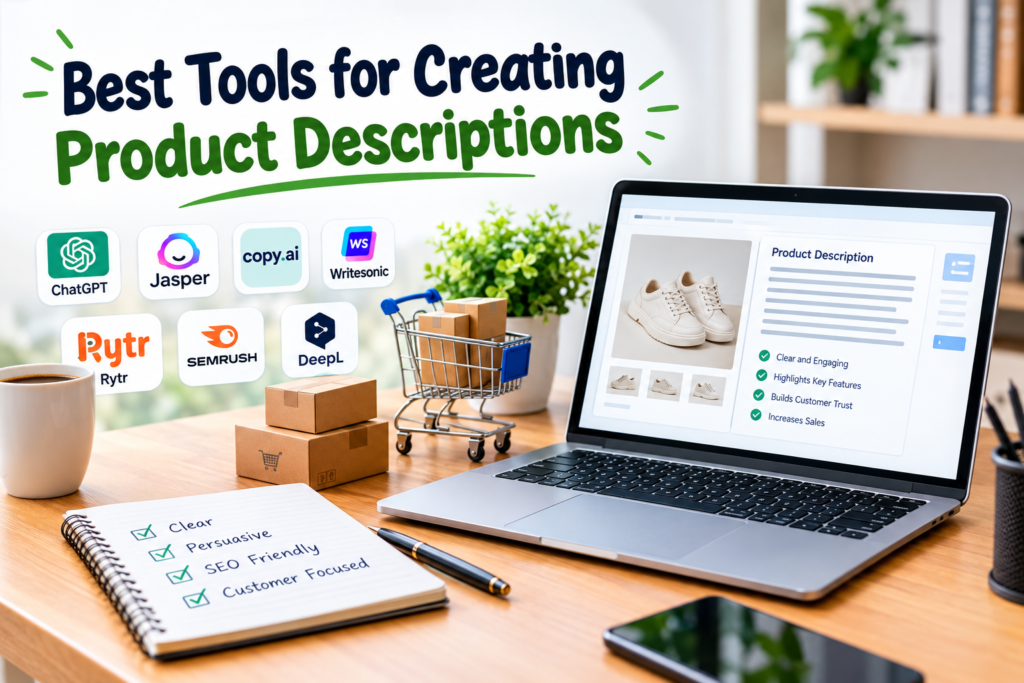
Creating a good product description may look simple, but in my experience, it can take more time than expected. A product description needs to explain what the product does, highlight its important features, answer customer questions, and give people a reason to consider buying it. When you have dozens or hundreds of products, writing every description manually can become a difficult task.
This is where product description tools can be very helpful. Today, there are many writing tools that can help create product descriptions faster while keeping the content clear and engaging. Some tools use artificial intelligence, while others focus on grammar, SEO, research, or content editing.
In this article, I will share some of the best tools for creating product descriptions and explain how I would use them to make product content more useful and effective.
Why Product Descriptions Matter
A product description is more than a few sentences placed below a product image. It helps customers understand what they are looking at and whether the product is suitable for their needs.
When I write a product description, I try to answer the questions a customer may have before making a purchase. What is the product? What problem does it solve? What are its main features? Who can use it? What makes it useful?
A clear description can also improve the overall shopping experience. If customers understand a product better, they can make more informed decisions.
For online stores, product descriptions can also support search engine optimization. Using relevant keywords naturally can help search engines understand what a product page is about.
ChatGPT for Product Descriptions
ChatGPT can be useful when you need ideas, drafts, product descriptions, or different writing styles. I find it especially helpful when I already have the important product information and need help turning that information into readable content.
For example, you can provide the product name, features, target audience, material, size, benefits, and other relevant details. The tool can then create a first draft based on that information.
One thing I recommend is not relying on the first generated version without reviewing it. AI can sometimes produce general statements that are not specific enough. I always check the description and make sure every claim is supported by actual product information.
The best results usually come when AI is used as a writing assistant rather than as a replacement for human judgment.
Jasper for Marketing Copy
Jasper is another AI writing platform that can help with marketing content, including product focused copy. It can be useful for businesses that need descriptions with a stronger marketing tone.
I would consider a tool like Jasper when working on multiple products and needing consistent messaging across a store.
A good product description should not sound like an advertisement in every sentence. Instead, it should explain the product first and then communicate its value naturally.
Jasper can help generate different versions of a description, which can be useful when you want to test different approaches or create content for different audiences.
Copy.ai for Product Content
Copy.ai is designed around AI powered content creation and can be useful for generating marketing copy and product related content.
One advantage of using an AI writing platform is speed. If you have a large product catalog, creating an initial draft for every product can take a significant amount of time.
I would still provide detailed information to the tool. The more useful information you provide, the easier it becomes to create a description that actually matches the product.
After generating the content, I would review the wording, remove unnecessary claims, and add specific details that make the description more useful.
Writesonic for E Commerce Content
Writesonic is another option for people who need AI assisted content creation. It can be useful for product descriptions, marketing content, and other website copy.
For an online store, consistency is important. Product descriptions should follow a similar structure so customers can easily find information.
For example, you might use a simple structure that starts with the product benefit, followed by important features and practical details. A tool like Writesonic can help you create initial content using a consistent approach.
I would then edit the description manually to make sure it matches the brand voice.
Grammarly for Editing Product Descriptions
Writing the first draft is only one part of creating good product descriptions. Editing is equally important.
Grammarly can help identify grammar, spelling, punctuation, clarity, and style issues. I like using grammar tools during the final editing stage because small mistakes can make otherwise good content look unprofessional.
For example, a missing comma, spelling mistake, or confusing sentence can reduce the quality of a product page.
However, I would not accept every suggestion automatically. Some suggestions may change the tone of the content in a way that does not match the brand.
The final version should sound natural and appropriate for the intended customer.
Semrush for Keyword Research
Product descriptions can also benefit from keyword research. Semrush provides SEO and keyword research features that can help you understand what people are searching for.
Before writing a product description, keyword research can help identify relevant search terms.
For example, instead of repeatedly using a broad phrase such as “running shoes,” you might discover related phrases that describe specific types of running shoes or customer needs.
The important thing is to use keywords naturally. Product descriptions should be written for people first.
Keyword stuffing can make content uncomfortable to read and can make the page look unnatural. I prefer using the main keyword where it makes sense and adding related terms naturally throughout the content.
Rytr for Quick Product Description Drafts
Rytr is an AI writing tool that can help create different types of marketing and business content. It can be useful when you need quick drafts or want to experiment with different tones.
For example, you may want a description that sounds friendly and simple for one product while using a more professional tone for another.
A tool like Rytr can help you create a starting point quickly.
I would then personalize the content by adding real product details, customer benefits, specifications, and information that makes the product different from similar options.
Canva for Product Marketing Content
Canva is mainly known as a design platform, but it can also be useful when working on product marketing.
Product descriptions work together with product images, banners, social media graphics, and promotional materials. Having a consistent visual style can make an online store look more professional.
For example, after writing a product description, you can create supporting graphics for social media or promotional campaigns.
I would not use a design tool as a replacement for a proper product description. Instead, I see it as a useful companion for presenting the product visually.
Google Docs for Writing and Collaboration
Sometimes the best tool is a simple one.
Google Docs can be useful for creating, reviewing, and organizing product descriptions. If several people are involved in managing an online store, shared documents can make collaboration easier.
You can create a standard product description template and use it for different products.
For example, your template might include the product introduction, key benefits, important features, specifications, usage information, and a short closing section.
This can help maintain consistency when multiple writers are working on the same project.
How I Choose the Right Product Description Tool
I do not think there is one perfect tool for everyone. The right choice depends on what you need.
If you need help generating ideas and drafts, an AI writing tool can be useful. If grammar and clarity are your biggest concerns, an editing tool may be more valuable.
If SEO is your main focus, keyword research software can help you understand search terms and related topics.
For a small online store, you may not need several expensive tools. A simple combination of an AI writing assistant, grammar checker, and keyword research tool may be enough.
For a larger store with hundreds or thousands of products, specialized e commerce content tools and automation features may save considerably more time.
Tips for Writing Better Product Descriptions
Tools can make the process faster, but the quality of the final description still depends on the information you provide.
I recommend starting with accurate product information. Include the important specifications, materials, dimensions, features, compatibility details, and practical benefits.
Write for the customer rather than simply describing the product.
For example, instead of saying that a water bottle has double wall insulation, explain that the insulated design helps keep drinks at a desired temperature for longer.
Avoid making claims that cannot be supported. Do not promise results that the product cannot realistically provide.
It is also helpful to keep paragraphs short. Online shoppers often scan product pages instead of reading every word. Clear headings, short paragraphs, and bullet points can make important information easier to find.
Avoid Copying Manufacturer Descriptions
One mistake I often see in online stores is using the exact product description provided by a manufacturer.
Even when the information is accurate, copied descriptions do not give your store a unique voice.
I prefer using the manufacturer’s specifications as a starting point and then writing the description in a clear and natural way.
This also gives you an opportunity to focus on the needs of your own audience.
Final Thoughts
The best tools for creating product descriptions can save time, improve writing quality, and make it easier to manage a large product catalog. AI writing tools can help with drafts, grammar tools can improve clarity, and SEO platforms can support keyword research.
However, I believe the tool should always support the writer rather than completely replace the writing process.
A strong product description should be accurate, clear, useful, and easy to understand. It should explain the product in a way that helps customers make an informed decision.
My preferred approach is to collect accurate product information first, create a simple draft, improve the structure, add relevant keywords naturally, and then edit the final version carefully.
When you combine the right tools with human editing and genuine product knowledge, creating high quality product descriptions becomes much easier. The result is content that can provide real value to customers while also making your product pages more useful for search engines.